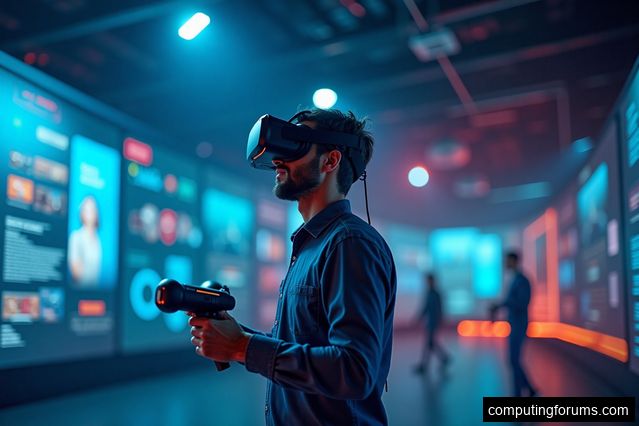


The Rise of Virtual Reality
Virtual Reality has come a long way since its inception. Initially popularized in the gaming industry, VR has now expanded its horizons to fields such as healthcare, education, and architecture. By creating a simulated environment, VR allows users to immerse themselves in a virtual world, offering a sense of presence like never before.
In healthcare, VR is being used for pain management, surgical training, and mental health treatments. Education is also benefiting from VR, enabling students to explore historical events, visit distant places, and engage in interactive learning experiences. Architects and designers can use VR to visualize and walk through their creations before they are built, streamlining the design process.
Augmented Reality: Bridging the Physical and Digital Worlds
While VR creates an entirely virtual environment, Augmented Reality overlays digital information onto the real world. AR has gained popularity through smartphone applications like Pokémon Go and Snapchat filters, but its potential goes beyond entertainment.
In industries such as manufacturing and logistics, AR enhances productivity by providing real-time information and instructions to workers. By wearing AR glasses or using handheld devices, employees can access data, view 3D models, and receive step-by-step guidance, leading to improved efficiency and reduced errors.
The Future Possibilities
As technology continues to advance, the future of VR and AR holds immense potential. One area that is expected to benefit greatly is telecommunication. With VR and AR, users will be able to have virtual meetings, attend concerts, and even travel the world without leaving their homes. This has the potential to revolutionize remote work and redefine the way we connect with others.
The healthcare industry will also see significant advancements. Surgeons will be able to perform complex procedures using AR overlays that provide real-time guidance, reducing the risk of errors. VR therapy will become more prevalent, allowing patients to address mental health issues in a controlled and immersive environment.
Final Thoughts
Virtual Reality and Augmented Reality are transforming the computing landscape, offering limitless possibilities for various industries. From healthcare to education, manufacturing to entertainment, VR and AR are revolutionizing the way we interact with technology and the world around us. As technology continues to evolve, the future of computing looks even more exciting with the integration of VR and AR.